
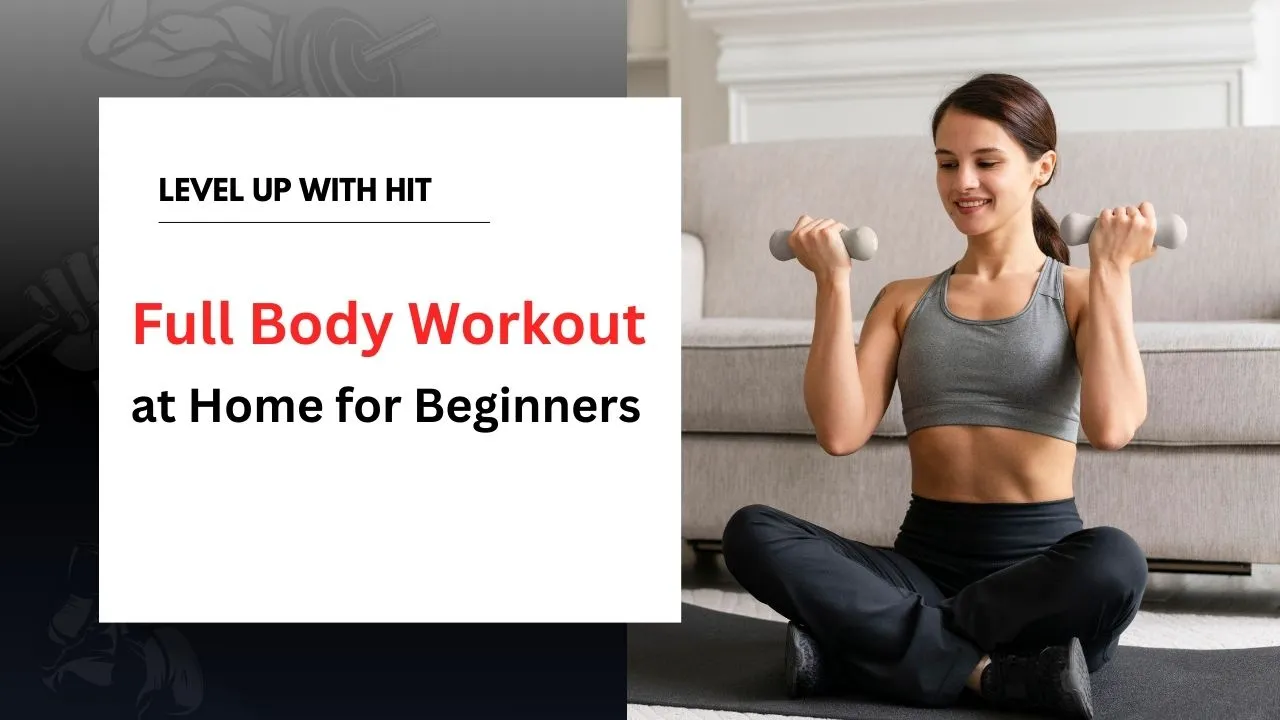
Starting your fitness journey doesn’t need a gym membership or expensive equipment. In fact, one of the best ways to begin is with a full body workout at home for beginners. These simple exercises help you build strength, improve flexibility, and increase energy, all from the comfort of your home.
If you’re new to working out, don’t worry. This guide will walk you through 10 easy, effective exercises, a warm-up, cool-down routine, and practical tips to stay consistent.
Why Beginners Should Start with Full Body Workouts
When you’re just starting out, it’s better to focus on full body exercises instead of splitting workouts into separate muscle groups. Here’s why:
- Efficiency: You work multiple muscles in less time.
- Fat Loss & Strength: Full body workouts burn more calories while strengthening major muscle groups.
- Flexibility in Routine: You can train just 2–3 days per week and still see results.
- No Equipment Needed: Most moves are bodyweight-based, so you don’t need a gym. Foundation for Progress: These workouts prepare you for more advanced training later.
- Foundation for Progress: These workouts prepare you for more advanced training later.
Warm-Up (5 Minutes)
A warm-up increases blood flow, activates muscles, and reduces injury risk. Spend about 5 minutes doing:
- Arm Circles – 30 seconds
- Jumping Jacks – 1 minute
- Marching in Place – 1 minute
- Torso Twists – 30 seconds
- Bodyweight Squats (slow pace) – 1 minute High Knees (low intensity) – 1 minute
- High Knees (low intensity) – 1 minute
10 Beginner-Friendly Full Body Workouts at Home
1. Push-Ups (Chest, Arms, Core)
- How to do it: Place your hands shoulder-width apart, lower your chest to the floor, and push back up.
- Beginner Tip: Start with knee push-ups if regular ones are too difficult.
- Reps: 8–10 Why it works: Push-ups strengthen your chest, shoulders, arms, and core all at once.
- Why it works: Push-ups strengthen your chest, shoulders, arms, and core all at once.
2. Bodyweight Squats (Legs & Glutes)
- How to do it: Stand tall, bend your knees, lower hips like you’re sitting in a chair, then stand up.
- Reps: 12–15
- Why it works: Squats build leg strength, improve mobility, and burn calories quickly.
3. Plank (Core & Stability)
- How to do it: Rest on your forearms and toes, keeping your body in a straight line.
- Duration: 20–30 seconds
- Why it works: Builds strong core muscles, which improve posture and prevent back pain.
4. Forward Lunges (Legs & Balance)
- How to do it: Step forward with one leg, bend both knees to 90 degrees, then return to standing.
- Reps: 8–10 per leg
- Why it works: Strengthens thighs and glutes while improving balance.
5. Mountain Climbers (Cardio & Core)
- How to do it: Begin in plank position, drive knees toward your chest alternately.
- Duration: 20–30 seconds
- Why it works: A great cardio move that also tones your core.
6. Glute Bridges (Lower Back & Glutes)
- How to do it: Lie on your back with knees bent, lift hips upward, and squeeze your glutes.
- Reps: 12–15
- Why it works: Strengthens lower back, hamstrings, and glutes—perfect for people who sit a lot.
7. Tricep Dips (Arms & Shoulders)
- How to do it: Sit on a chair or bench, place hands on the edge, lower your body down, and push back up.
- Reps: 8–12
- Why it works: Targets the back of your arms, an area many beginners want to tone.
8. High Knees (Cardio & Core)
- How to do it: Jog in place, lifting your knees to waist height.
- Duration: 30 seconds
- Why it works: Elevates your heart rate and strengthens your legs.
9. Superman Pose (Back & Core)
- How to do it: Lie face down, extend arms forward, and lift arms and legs off the floor.
- Hold: 15–20 seconds
- Why it works: Strengthens your back muscles and improves posture.
10. Burpees (Full Body & Cardio)
- How to do it: From standing, squat down, kick legs back into plank, jump back up, and clap overhead.
- Beginner Tip: Skip the push-up if it’s too challenging.
- Reps: 6–8
- Why it works: A complete full-body workout that builds strength and endurance.
How to Structure the Workout
Here’s a simple way to put it all together:
- Perform each exercise for 8–15 reps (or 20–30 seconds for timed moves).
- Complete all 10 exercises as a circuit.
- Rest for 1–2 minutes after finishing one round.
- Repeat for 2–3 rounds depending on your fitness level.
Cool Down & Stretch (5 Minutes)
Cooling down helps your muscles relax and reduces soreness. Try:
- Child’s Pose – 30 sec
- Seated Hamstring Stretch – 30 sec each leg
- Chest Opener Stretch – 30 sec
- Cat-Cow Stretch – 1 min
- Seated Forward Bend – 1 min
Common Mistakes Beginners Make
- Skipping Warm-Up & Cool-Down – This can increase injury risk.
- Poor Form – Doing exercises too fast or incorrectly reduces results.
- Doing Too Much Too Soon – Start slow to avoid burnout.
- Inconsistency – Working out once a week won’t bring results. Aim for at least 3 sessions weekly.
- Ignoring Rest Days – Muscles grow and repair during rest.
How to Progress Over Time
- Increase reps: Move from 10 to 15–20 reps.
- Add rounds: Start with 2 rounds, then progress to 3–4.
- Reduce rest: Shorten breaks to make workouts more intense.
- Add weights or resistance bands: Once bodyweight feels easy.
Final Thoughts
A full body workout at home for beginners is one of the simplest ways to get fit without relying on a gym. These 10 exercises target all major muscles, boost your stamina, and help build a strong fitness foundation. At Level Up With Hit, our goal is to make fitness simple, effective, and accessible for everyone.
The key is consistency. Even if you start with just 15–20 minutes three times a week, you’ll see progress in strength, energy, and confidence. Remember: your fitness journey is a marathon, not a sprint—focus on building habits, and results will follow.
Frequently Asked Questions
1. Can beginners really do a full body workout at home without equipment?
Yes! Most effective beginner exercises use only bodyweight. Push-ups, squats, planks, and lunges build strength and improve endurance without any equipment.
2. How many days a week should beginners do a full body workout?
Start with 2–3 days per week, giving at least one rest day in between. This allows your muscles to recover and helps prevent burnout.
3. How long should a beginner’s home workout last?
A full body workout at home for beginners can be done in 20–30 minutes, including warm-up and cool-down. Consistency matters more than workout length.
4. Do full body workouts help with weight loss?
Yes. Full body workouts burn more calories by engaging multiple muscle groups. Combined with a balanced diet, they are effective for fat loss and strength building.
5. What is the best time to do a full body workout at home?
There’s no single “best” time. Choose a time you can stick to consistently. Morning workouts boost energy for the day, while evening sessions may help release stress.
6. How can beginners track their progress at home?
You can track progress by noting the number of reps, sets, or workout rounds completed. You’ll also notice improvements in stamina, strength, and how your clothes fit.
7. When should I move from beginner workouts to advanced exercises?
Once you can easily complete 3–4 rounds of all exercises with good form, you can add resistance bands, dumbbells, or increase intensity for progression.